Fabrics
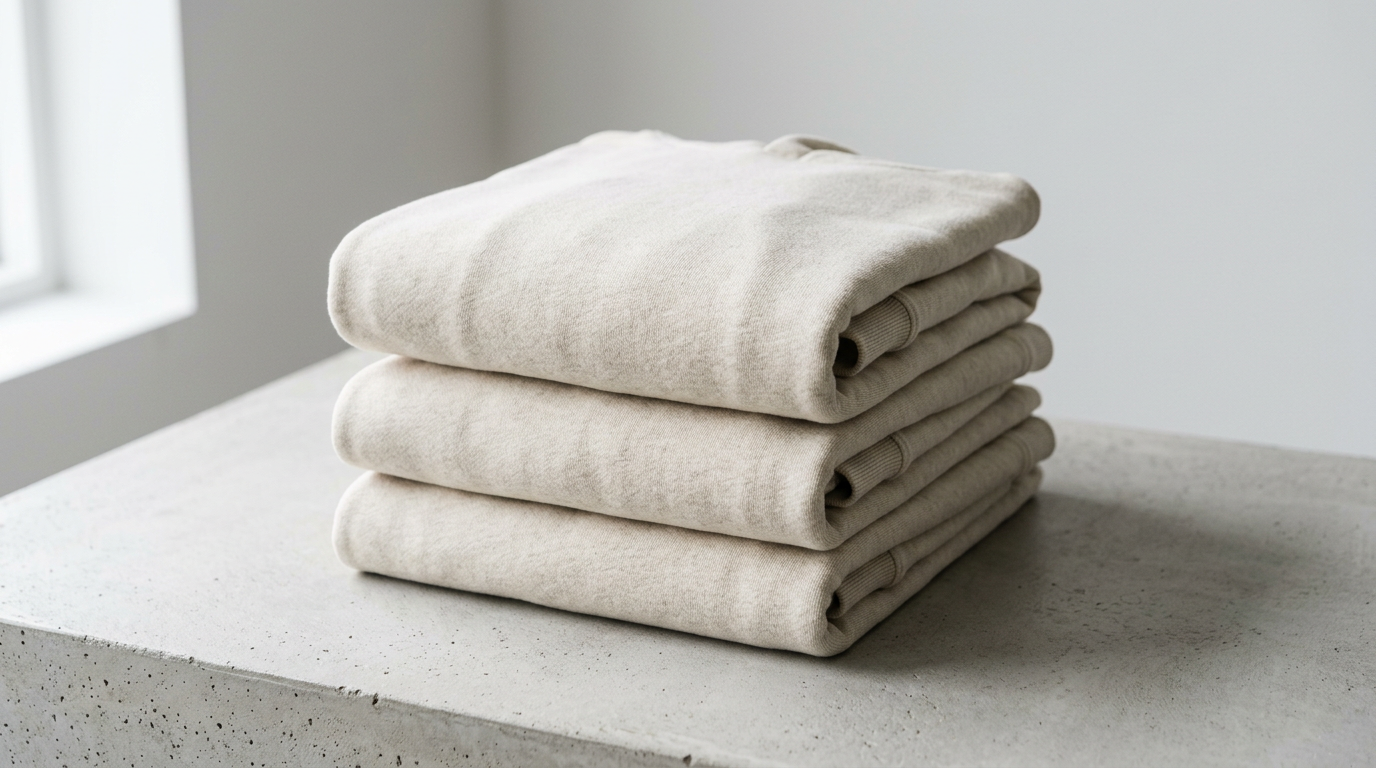
Fleece and sweatshirt fabrics are valued for their warmth, softness, and everyday comfort. But they’re also among the most care-sensitive fabrics in any wardrobe — prone to pilling, shrinkage, and texture loss when laundered incorrectly. The fluffy pile surface that makes fleece feel premium is also what makes it vulnerable to friction, heat, and the wrong chemistry.
This guide covers everything you need to know to wash, dry, store, and maintain fleece hoodies, crew-neck sweatshirts, and fleece-lined pieces — keeping them soft, full-bodied, and looking their best across years of regular use.
Quick Reference: Fleece Care Rules
✅ Always Do
- Turn inside out before every wash
- Wash cold (max 30°C), gentle / casual cycle
- Use mild, colour-safe detergent
- Wash similar colours together
- Air dry in shade — best for pile texture
- Fold for storage; use a fabric shaver for pills
❌ Never Do
- No fabric softener — coats pile fibres, reduces softness long-term
- No bleach — degrades fibre structure and destroys colour
- No hot water or high-heat drying — melts synthetic pile
- No iron on high heat — flattens fleece permanently
- No washing with rough items — causes aggressive pilling
- No long soaking — breaks down cotton-blend fibre integrity
1. Washing: Protect the Pile & Prevent Pilling
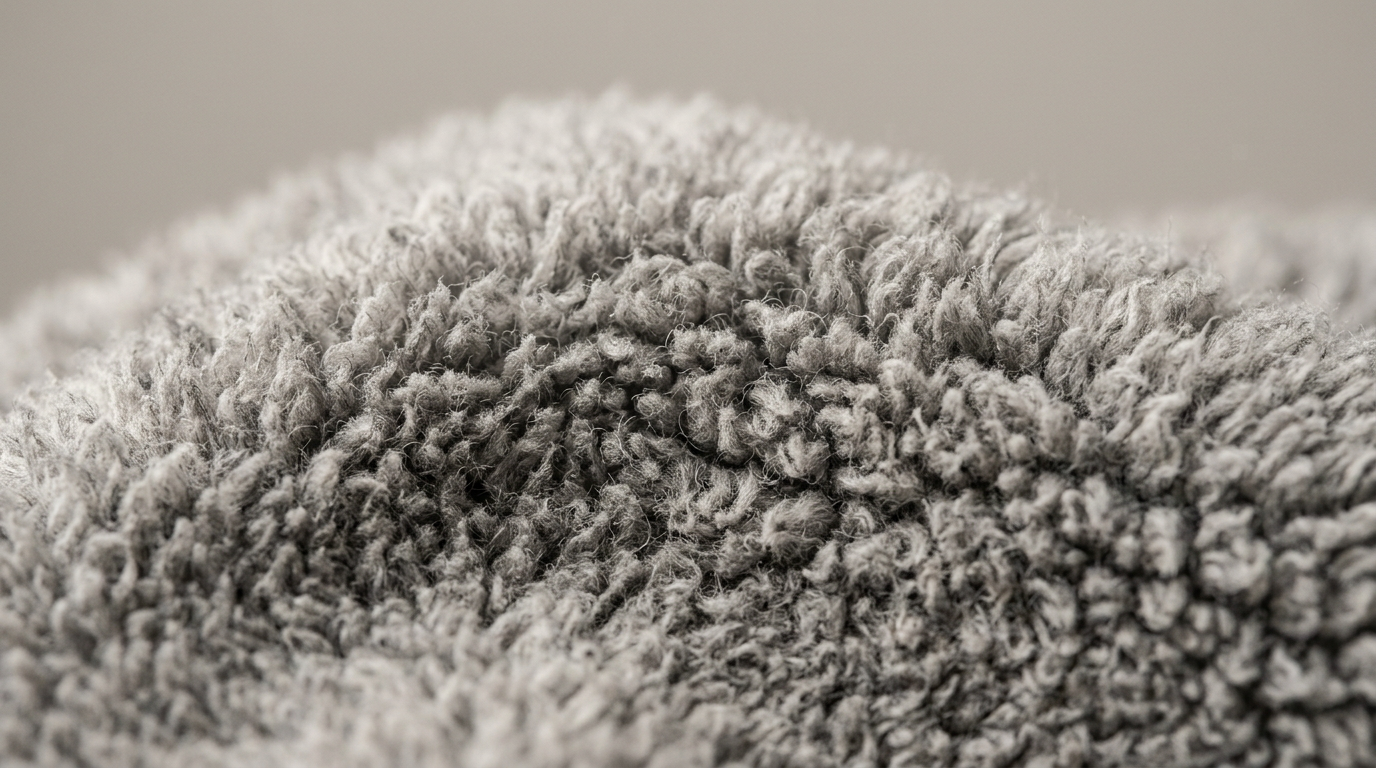
Pilling is the most common fleece care complaint — and it’s almost entirely caused by washing mistakes, not by fabric quality. The raised pile loops that give fleece its characteristic softness are also highly susceptible to surface abrasion during the wash cycle.
- Turn inside out every time
The outer pile surface is the most vulnerable part of a fleece garment. Turning inside out reduces direct friction between the pile and other items in the drum, dramatically cutting pilling over repeated washes. - Cold water, gentle or casual cycle
Cold water (max 30°C / 86°F) prevents the synthetic components of fleece from softening and distorting, which is what causes shrinkage and permanent texture change. The gentle cycle minimises mechanical agitation on the pile surface. - Mild detergent only — no bleach, no softener
Fabric softener deposits a coating on fleece pile fibres that initially feels smooth but progressively flattens and mats the pile — the opposite of what softener is supposed to achieve. After several softener washes, the fleece texture becomes irreversibly degraded. - Wash with similar fabrics
Never wash fleece with denim, jeans with metal hardware, velcro panels, or rough canvas items. These act as abrasives against the pile surface and generate pilling even in a single wash cycle. - No long soaking
Prolonged soaking weakens the fibre binder in cotton-faced fleece constructions and can cause uneven surface texture and dimensional distortion.
2. Drying: Keep the Fluff
- Air dry flat or hung in shade
The gentlest drying method for fleece. Lay flat on a clean surface or hang on a broad hanger in a ventilated, shaded area. Air drying preserves pile loft, prevents static buildup, and eliminates any risk of heat-related shrinkage or texture loss. - Low-heat tumble dry only, if necessary
If machine drying is required, use strictly the lowest heat setting. High heat melts the polyester fibre tips in the fleece pile, permanently flattening the texture and causing a shiny, matted surface that cannot be restored. Remove while still very slightly damp and shake gently to re-loft the pile. - Remove promptly when dry
Leaving fleece in a warm dryer drum after the cycle generates static and causes light compression of the pile surface. Prompt removal and a gentle shake immediately restores loft. - No direct sunlight for extended periods
UV exposure fades fleece dyes and progressively weakens synthetic fibre tensile strength. Dry in shade or indoors, particularly for richly dyed or pigment-treated sweatshirts.
3. Ironing, Storage & Pilling Maintenance
Ironing & Steaming
- Fleece generally does not need ironing — the pile surface naturally resists creasing compared to woven fabrics.
- If seams or cuffs need flattening: iron on the lowest heat setting only, inside out, with a pressing cloth between the iron and the fabric. Never touch an iron directly to the outer fleece surface — high heat permanently melts and flattens the pile.
- A handheld steamer used at a distance is a gentler alternative for light creases, held on the reverse side only.
Storage
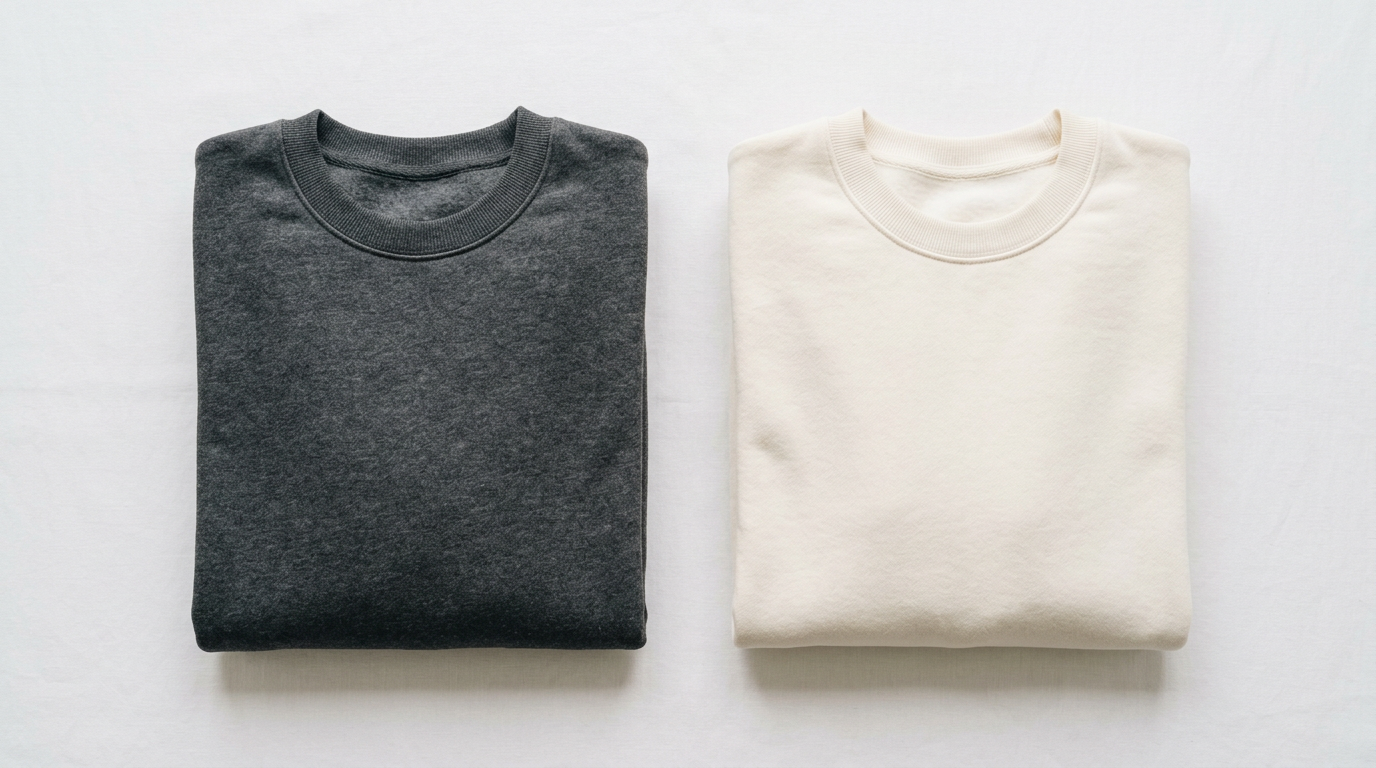
- Fold and stack rather than hanging — heavy fleece hoodies hung long-term stretch the shoulder seams and distort the neckline permanently.
- Store in a cool, dry, ventilated space. Fleece retains moisture if stored damp, which causes mildew odour that is very difficult to remove.
- Keep away from sharp objects, velcro panels, or rough storage surfaces that cause surface pilling even without washing.
Pilling Maintenance
Some surface pilling is normal on any fleece or sweatshirt fabric — it’s a natural characteristic of looped pile constructions under friction. The goal is to minimise it through correct washing and to manage it when it does occur.
- Use a fabric shaver (lint shaver) to remove existing pills without damaging the base fabric. Work in small circular motions on the affected area. Do not press hard — let the shaver do the work.
- A lint roller or wide tape removes loose fibres and surface fuzz between washes, reducing the accumulation that eventually becomes pills.
- Pills concentrate at friction points — cuffs, underarms, hem, and the front panel where bag straps or seatbelts rub. These areas benefit from extra care: turn inside out, use a garment bag when machine washing, and inspect regularly.
- Prevention is more effective than removal: the turn-inside-out + gentle cycle + wash-separately rule eliminates the majority of pilling before it starts.
4. Decorated Fleece & Sweatshirts: Prints & Embroidery
Hoodies and sweatshirts are one of the most popular platforms for printed and embroidered decoration. The fleece construction adds one additional consideration: the pile surface creates more friction against prints and embroidery than a smooth knit, making cold wash and gentle cycle even more important.
Printed Fleece & Sweatshirts
- Always wash inside out — for printed fleece, this protects both the decoration and the pile from abrasion simultaneously.
- Cold wash, gentle cycle, no fabric softener — the fleece care rules and print care rules are fully aligned.
- Avoid high heat drying — damages both the synthetic fleece pile and causes ink cracking on screen and DTG prints.
- Never iron over a print on fleece — both the pile and the ink will be damaged by direct iron contact.
Embroidered Fleece & Sweatshirts
- Use a mesh laundry bag — protects both the embroidery thread from snagging and the outer pile from abrasion in the drum.
- Gentle cycle only — reduces tension on both the embroidery backing stabiliser and the fleece pile construction.
- Air dry flat — heavy fleece garments with embroidery can stretch at the embroidery site if hung wet. Flat drying removes this risk.
- Never scrub the embroidery area when pre-treating stains — dab gently, and keep stain treatment away from the thread surface.
Frequently Asked Questions
Why does my fleece start to pill?
Pilling is caused by friction — during washing (against other items in the drum), during wear (at high-friction points like underarms and cuffs), and during storage (against rough surfaces or other garments). The primary prevention is turning inside out, washing on a gentle cycle, and never washing with rough fabrics. Once pilling appears, a fabric shaver removes pills cleanly without damaging the base fabric.
Will my sweatshirt shrink after washing?
Hot water and high-heat drying are the primary causes of shrinkage in fleece and sweatshirt fabrics. Cold water washing and low-heat or air drying virtually eliminates further shrinkage in standard use. DRIOV fleece blanks are pre-shrunk during manufacturing — any residual shrinkage from correct cold washing is minimal and typically stabilises after the first 2–3 wash cycles.
Can I use fabric softener on fleece?
We do not recommend it. Fabric softener deposits a waxy coating on fleece pile fibres that initially makes the surface feel smooth, but progressively mats and flattens the pile over repeated applications. After several softener washes, the characteristic fluffy texture of the fleece becomes noticeably less full and cannot be restored. Air drying is the most effective way to maintain fleece softness naturally.
How do I keep fleece fluffy after washing?
Air dry or tumble on the lowest heat setting, and remove promptly. If machine drying, give the garment a gentle shake immediately after removing from the dryer to re-loft the pile before it cools and sets. Avoid fabric softener, which mats the pile over time. For heavily flattened fleece after a hot wash, a cool tumble cycle (10–15 minutes, no heat) with a clean tennis ball can sometimes restore some loft by agitating and separating the compressed fibres.
How do I remove stains from fleece without damaging the fabric?
Dab — never rub — stain remover onto the affected area. Rubbing spreads the stain and causes immediate pilling at the treatment site. Use a colour-safe, non-bleach stain remover applied to the fabric surface only (not the pile), leave for the directed time, then wash cold on a gentle cycle as normal. For oil-based stains, a small amount of dish soap applied directly and rinsed with cold water before washing is effective on most fleece constructions.
DRIOV premium blank apparel is built to last — with proper care.
We use high-quality fleece and sweatshirt fabrics selected for durable comfort and long-term softness retention. Follow this guide and your hoodies and sweatshirts will stay warm, full-textured, and in excellent condition across years of regular wear.
You May Also Like
Decoration
Print & Embroidery Care Guide
How to protect screen prints, DTG graphics, and embroidery on all decorated hoodies and sweatshirts.
Read guide →Fabric Care
Cotton Care Guide
Washing, drying, and storing 100% cotton tees and hoodies — keeping softness, shape, and colour intact.
Read guide →