Decoration
Embroidery adds a premium, tactile finish that no print technique can replicate — raised stitching, rich colour depth, and a professional quality that communicates brand value immediately. It’s the decoration method of choice for logos, team uniforms, corporate kits, and any application where durability and perceived quality matter.
At DRIOV, we use high-quality polyester threads, precise digitising, and strict per-garment inspection to ensure clean, consistent embroidery across every batch. This guide covers everything you need to know — from artwork requirements and placement options to thread quality and wash care — so your embroidered programme delivers exactly what you expect. Request a quote for embroidery →
1. Artwork & Design Requirements
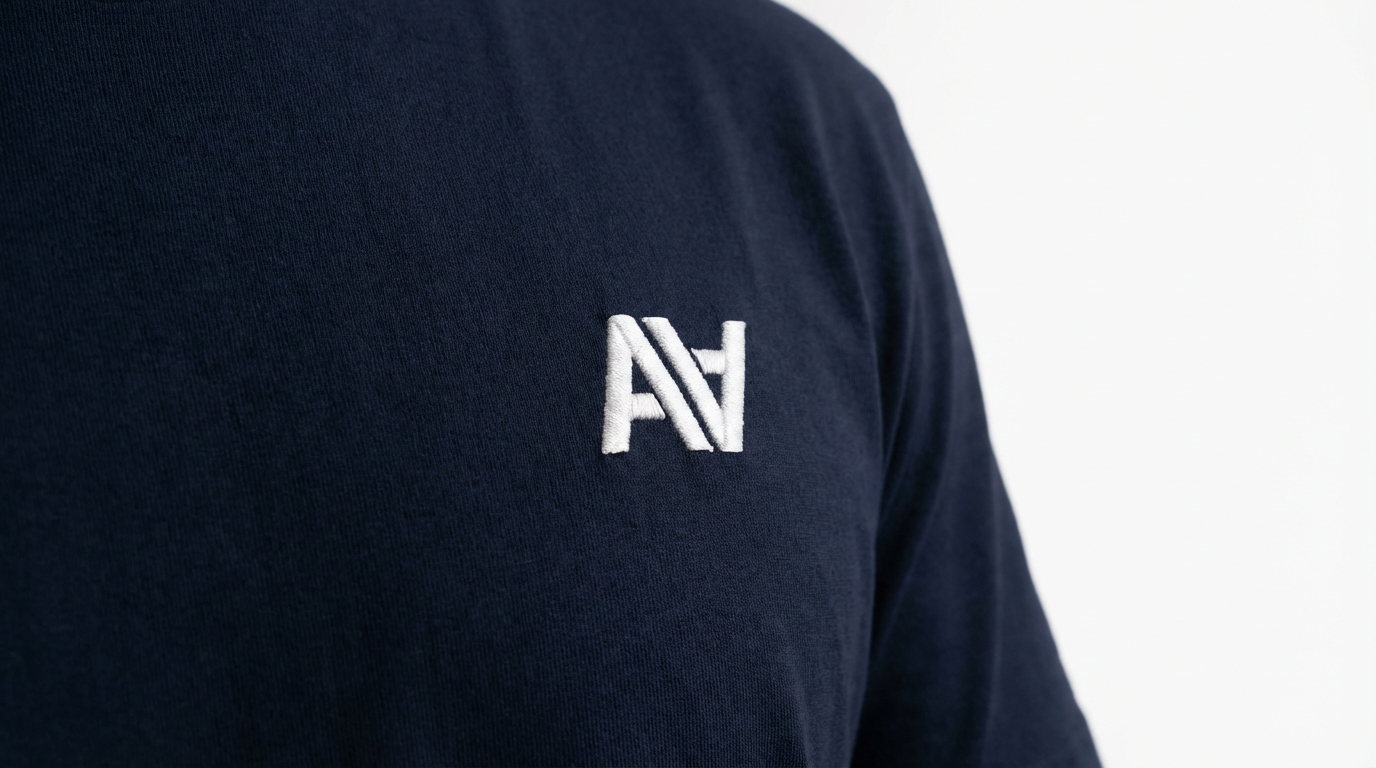
Good embroidery starts with good digitising. Unlike printing, embroidery translates your design into thousands of individual stitch paths — the quality of that translation determines everything from stitch consistency to run time and fabric pucker.
- Preferred file formats
Vector files (AI, EPS, PDF) are ideal — they allow precise digitising without pixelation. High-resolution PNG with a transparent background (minimum 300 dpi) is also accepted. Low-resolution JPG files are not recommended. - Keep designs clean and clear
Embroidery works best with bold shapes, solid fills, and defined outlines. Avoid extremely fine lines (under 1mm), tiny lettering, or photographic detail — these translate poorly into stitchwork regardless of the digitiser’s skill. - Minimum text size
For consistent legibility, we recommend a minimum text height of 6–7mm for standard embroidery. For puff or 3D embroidery, 10mm or above is required. - Digitising is included
We digitise every customer design into a production-ready stitch file at no additional cost for qualified orders. A digitised proof is provided for customer approval before production begins. - Colour matching
We match thread colours to your reference file as closely as possible using our production thread library. For exact brand colour matching, please provide Pantone references.
2. Thread & Material Quality
Thread quality determines how embroidery looks on day one — and how it holds up after fifty washes. We use commercial-grade polyester embroidery thread across all production runs, selected for colourfastness, tensile strength, and consistency across the full colour range.
- High-tenacity polyester thread
Polyester embroidery thread outperforms rayon in abrasion resistance, wash durability, and colour retention — making it the professional standard for apparel decoration intended for repeated laundering. - Colour fastness
All threads used in our production meet commercial colour fastness standards for washing, rubbing, and light exposure. Colours remain vibrant across hundreds of wash cycles with correct care. - Free from harmful substances
All threads used in production comply with REACH and GB 18401 safety standards — no azo dyes, no heavy metals, safe for direct skin contact. - Backing stabiliser selection
The correct backing (cut-away, tear-away, or water-soluble) is selected based on the fabric type and stitch density of each design. This prevents puckering, distortion, and fabric damage across the full run. - Stitch density control
Density is calibrated per design to ensure a smooth surface feel on the reverse of the garment — important for tees and lightweight fabrics worn directly against skin.
3. Placement Options
We support all standard embroidery placement locations, plus custom positioning on request. The most common placements for branded apparel programmes are:
Most Popular
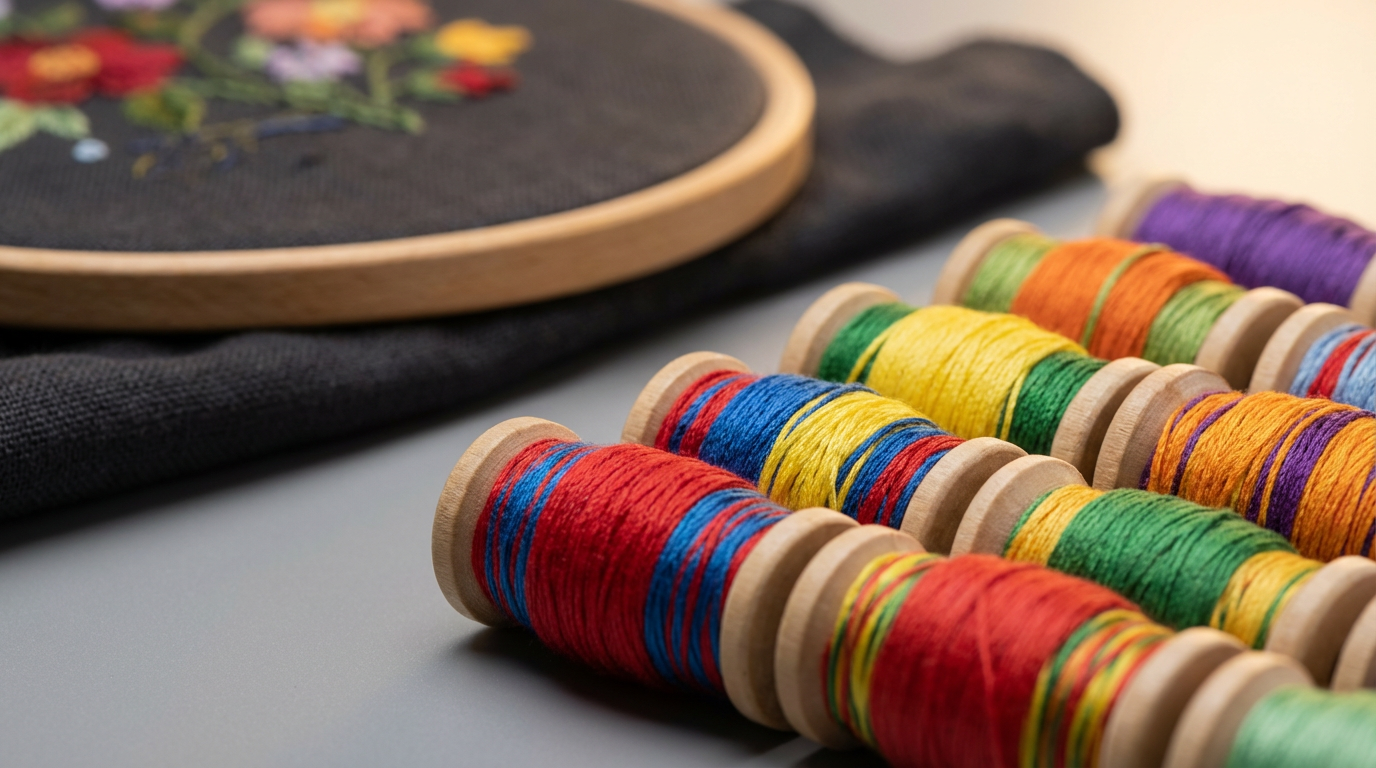
Left Chest
Logo placement above the left breast — the universal standard for branded tees, polos, and workwear.
Classic
Right Chest
Alternative to left chest — often used for name/role text alongside a left chest logo.
Statement
Full Back / Large Back
Large-format logo or text across the upper back — ideal for team wear and streetwear-adjacent programmes.
Detail
Sleeve Logo
Left or right sleeve — popular for secondary brand logos, collaboration marks, and capsule collections.
Subtle
Collar / Neck
Small logo or text near the neckline or collar — a refined placement used in premium and luxury-adjacent lines.
Flexible
Custom Placement
Any placement not listed above — confirm with our team at the sample stage for accurate positioning.
4. Stitch Quality Control & Production Standards
Pre-Production
- Every design is digitised and a physical stitch-out sample is produced and reviewed before the production run begins.
- Stitch count, colour sequence, and registration accuracy are verified against the customer’s approved artwork.
- Backing type and stitch density are confirmed based on the specific garment fabric and weight.
During Production
- Rolling in-line inspection checks stitch consistency, placement accuracy, and colour registration throughout the run.
- Underlay stitches are used on all designs to stabilise the fabric and prevent puckering, ensuring the embroidery lays flat regardless of fabric stretch.
- Loose threads are trimmed and backing is finished per garment before moving to final inspection.
Final Inspection
- 100% visual inspection of every embroidered garment — checking stitch integrity, edge alignment, thread ends, and placement accuracy before packing.
- Any garment with misalignment, uneven density, or visible defects is pulled and reworked. No compromises at the final stage.
Fabric Compatibility
- Embroidery performs best on cotton, polyester, and blended fabrics. Our team recommends appropriate stitch density for each fabric weight.
- Lightweight fabrics (under 150 GSM) may require a water-soluble topping to prevent stitches from sinking into the weave — this is handled as part of our standard digitising process.
5. Embroidery Care Instructions
High-quality embroidery is inherently durable — but incorrect washing can damage the backing stabiliser or distort the stitch pattern. Share these simple guidelines with your end-customers:
✅ Recommended
- Turn inside out before every wash
- Cold water wash, gentle / delicate cycle
- Use a mesh laundry bag to prevent thread snagging
- Air dry flat to preserve embroidery shape
- Iron from the inside only, or use a pressing cloth on the reverse
- Trim any loose threads with scissors — cut flush, do not pull
❌ Avoid
- Bleach or chlorine-based cleaners — discolours thread
- Scrubbing the embroidered area — distorts stitching
- Pulling loose threads — can unravel back to the lock stitch
- High-heat tumble drying — causes stabiliser contraction
- Dry cleaning — solvents damage polyester thread and backing
- Ironing directly over embroidery — flattens raised texture
For full decoration care instructions across all methods, see our Decoration Guide →
Frequently Asked Questions
How long does embroidery last?
With correct care, high-quality polyester embroidery on well-constructed garments can withstand hundreds of wash cycles without fading, fraying, or distortion. Embroidery is the most durable decoration method available for apparel — far outlasting any print-based technique under equivalent washing conditions.
Can you embroider small text or fine details?
Extremely fine details and very small text do not stitch clearly regardless of digitising quality — the physical minimum is constrained by needle and thread diameter. We recommend a minimum text height of 6–7mm for standard embroidery. If your design contains fine elements that may not translate, we’ll flag this during the digitising review and suggest alternatives before production begins.
Can I provide my own logo?
Yes. Send your logo file (vector preferred) and we will digitise it into a production-ready stitch file. We provide a digitised proof for your approval before any garments are embroidered, so you can confirm placement, thread colours, and stitch accuracy before the run begins.
Is embroidery suitable for all fabrics?
Embroidery works well on cotton, polyester, and blended fabrics — which covers the majority of our blank apparel range. Very lightweight fabrics (under 150 GSM) or highly elastic fabrics may require adjusted stitch density or a water-soluble topping. Our team will advise on the most appropriate approach during the sample stage for any non-standard fabric.
What is the minimum order quantity for embroidery?
Our standard MOQ for embroidered garments is 50 pieces per design and colourway. For 3D puff embroidery or multiple placement locations, please contact our team to discuss requirements — minimum quantities vary by complexity.
DRIOV premium blank apparel is built to last — with decoration that holds up to match.
Every embroidered garment we produce combines precision digitising, commercial-grade thread, and strict per-piece inspection to deliver a consistent, professional result at scale. Quality is not an aspiration — it’s a process requirement built into every step of our production.
You May Also Like
Decoration
Decoration Guide
Full care guide for all decoration methods — screen printing, DTG, embroidery, and heat transfer — in one place.
Read guide →About DRIOV
Responsible Production
Our QC standards, compliance certifications, and ethical manufacturing commitments — what makes every DRIOV garment reliable.
Learn more →